![Surveillance, Targeting and Night Observation [STANO]: Then and Now](http://brushbeater.store/cdn/shop/articles/ChatGPT_Image_Mar_24_2026_06_16_55_AM_3cd8aad4-e6b0-45c2-833c-4a7af716fa5b.png?v=1774366121&width=1100)
Surveillance, Targeting and Night Observation [STANO]: Then and Now
I had someone ask me in the last Recce Course where I thought the future of weapons optics was headed. My answer was pretty direct - STANO integration in a more streamlined sense, possibly replacing daytime optics in a direct action role. Not completely, mind you, at least in the near term. But definitely becoming more commonplace from a niche role that most consider it even today.

That idea, of course, is nothing new. It goes back to at least WWII with the first generation night scopes. The Germans and US experimented with night vision devices being fielded on the first generation of assault weapons, the STG-44 and M3 Carbine, respectively. The latter saw extensive use in the Okinawa campaign in the late stages of the war, claiming 30% of the Japanese casualties.

Fast forward to Vietnam, great strides had been made not just in the advancement of the technology but its integration into the small unit. Adelbert Waldron III, the deadliest sniper of the Vietnam War, would most often carry a suppressed XM21 (an accurized M14) with an AN/PVS-2 night vision sniper scope. Towards the end of the war special operations units would utilize the PVS-2 on the M16 and, in some limited cases, Colt Carbines for happy hunting at night.

We've certainly come a long way since then in every way. One of the fundamental questions among tacticians has been the best implementation of night vision equipment, and by proxy, thermal into the mix. Night Vision devices today are thought of primarily as head mounted units for greater mobility at night. But I personally used the PVS-30 in the designated marksman's role. Today that has evolved and dominated by thermal, leaving the question among many what they should pick up first - night vision or thermal devices. The more important question there is how you personally plan on employing it. My answer remains the same: night vision is for mobility, thermal is for target acquisition.

In the present day thermal optics have made a complete night-and-day change from where they were even a decade ago. The advancement of heat sensor and processor technology took thermal imaging from simply detecting heat signatures in units like the PAS-13 to now revolutionizing how we conceptualize weapons integration itself. The reality is that night vision is proliferated on both sides of the battlefield, and common sense suggests that the old methods of targeting under NODs with IR lasers (active aiming) may not be best in all cases. Personally I don't think that a fighting weapon should be without an IR laser - you have to have a way to aim on the move under NODs - but in a static position, going with a weapons mounted thermal is undoubtedly the King.

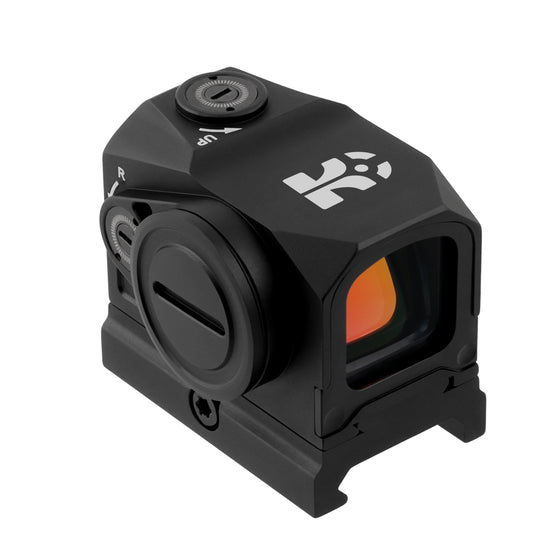
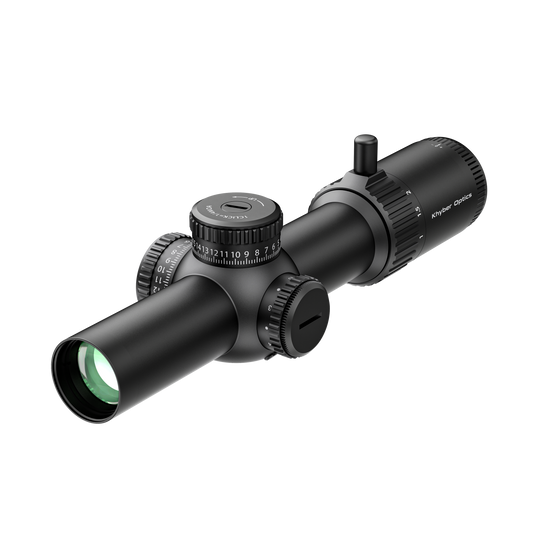
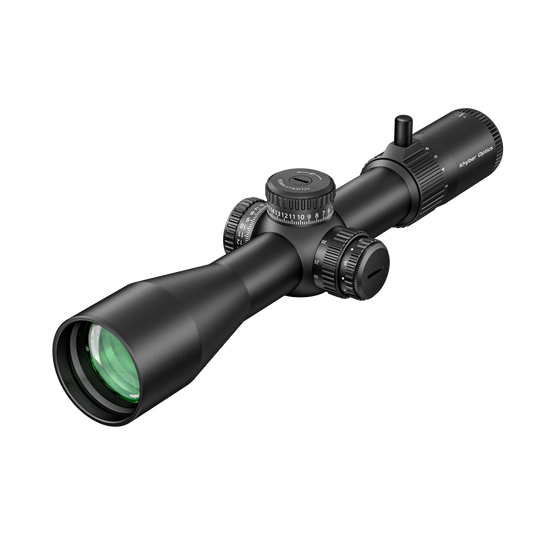
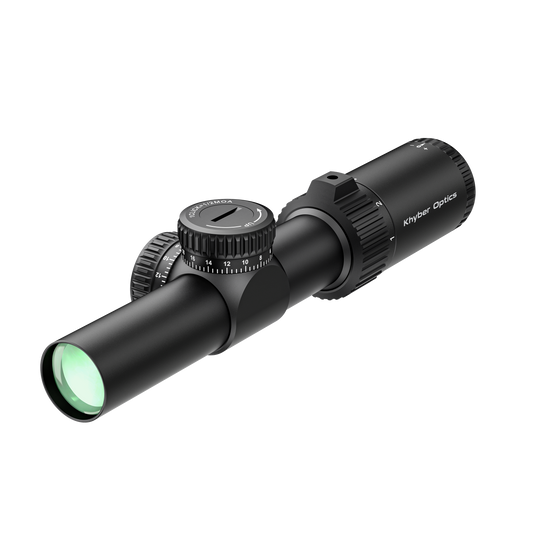
So - where do I think its headed? In a nutshell we'll see a larger number of devices being proliferated and its my opinion that if you're not addressing the issue you're behind the power curve. Compact thermal scopes are definitely an option some go, and for overall weight savings that's not necessarily wrong thinking. But having a primary optic that's not wholly dependent on batteries is always what I'll grab and go. The thermal is an enabler, not my primary, but that's just me. There's few setups better than a first focal plane scope and a clip on thermal to give the best of all worlds any time of the day.

The evolution of it all has been as fascinating to watch as it has been to be a participant in it. The tech is here to stay, whether we like that or not, and we have to make strides to address that reality. And, as always, well regulated means well trained and well equipped.