Skip to content

A Look at the Baofeng Tech DMR 6X2

Baofeng Tech’s DMR-6X2 made waves a few years back as a high end offering into the Digital Mobile Radio (DMR) market at a highly competitive price. Previously it was either prohibitively expensive to do so or not worth the effort in terms of equipment limitations. With that said, DMR offers some advantages to the inter-team / inter-squad communications capabilities built in, with a few caveats. In addition, it is a very similar radio to another on the market, the Anytone 878, with a serious advantage over its cousin.

Why would you want to add DMR to your equipment arsenal? What it does, it does well, having a native SMS text message capability and the ability to load encryption keys via the software. Its also backwards compatible with the standard Kenwood two prong K1 connection port, meaning all of the standard accessories (including the K1 data cable) work. The radio can operate in either analog or its DMR digital protocol and the bulk of its features are indexable from the front panel and menus. This leads to obviously a stronger layer of communications security (COMSEC) at the tactical level.

In comparison to the Anytone 878, the DMR-6X2 is completely unlocked, meaning in short, there’s no special setting the user has to enter in order to operate outside the standard Amateur Radio (Ham) frequency ranges. This was one of the leading reasons I chose this model over the Anytone, even though they share the same radio casing and build quality, and I consider it a critical requirement for any radio in my arsenal to operate within its full frequency range.

We’d be remiss to overlook potential drawbacks – DMR itself is a unique signal pattern, and absent any consideration to the amount of time transmitting against an adversary with any monitoring and direction finding (DF) capability, you 100% will become a target. In addition, DMR by its nature transmits metadata in the form of a radio identifier, color code and time slot of the signal as part of the packet whether that’s voice or SMS messages. Finally, its important to point out that the SMS messages are never encrypted if that’s enabled – only the transmitted voice messages. So with that said the same guiding principles behind tactical communications as explained in the Guerrilla’s Guide to the Baofeng Radio are applicable to DMR. Its best to understand it as another digital mode, nothing more, nothing less. If you intend on using this radio in a tactical role do not enter in Personally Identifiable Information (PII) into the code plug, or radio program image.

The DMR-6X2 is a hell of a nice tool in an IP54 water-resistant case. I have yet to break mine and have been very happy with them. Its a different tool from the other equipment we offer, with its own unique mission profile. I’m proud to offer it and I think you’ll like it too.

Xiegu X6100: The Modern Para Set

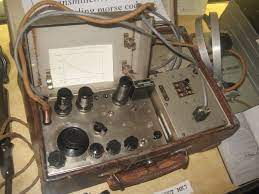
If you search the Para Set, you’ll find an incredibly neat piece of history from the genesis of the clack and dagger era: WWII and the early part of the Cold War. Spies relied upon one way messages transmitted via Shortwave (HF Radio) and encrypted with One Time Pads that also had the ability to transmit should the need arise. For that reason they required a simple, self contained, low power radio that met the needs. What they got was known as the Para Set.

Having a receive and transmit coverage between 3 and 7.6mHz or so in two selectable bands, we’d come to know this in later years as the Amateur 80m (3.5-4mHz) and 40m (7-7.3mhz) bands for Night and Day use, respectively. And while these weren’t meant for civilian use, some inevitably did find their way into civilian hands in later years with Hams even creating reproduction kits.

But the Para Set was really a special tool beyond the novelty of its history. It was a compact, self contained tool. No cables necessary for a separate tuner – an antenna matching unit was built in, as was the power source. This made for a radio that could also easily be hidden and otherwise camoflaged. Rather than the large capacity base stations pumping out thousands of watts safe from the Radio Direction Finding (RDF) hunter killer teams of the Gestapo and Waffen SS, the Para Set maintained a diminutive 5 watts maximum output – enough for a quick burst of CW Morse code.

These days I get a lot of questions from radio operators and guys looking to develop their communications capability past the Sustainment and Tactical or Inter-team roles into the Clandestine end of things, meaning HF. Much of my early work focused on HF as a means to communicate over long distances coordinating different groups, and in particular, utilizing Near Vertical Incidence Skywave (NVIS) as a technique for reliability and mitigating the RDF threat. Those early articles are all found in the Guerrilla Dispatch Volumes 1 and 2, including some excellent work by my close friend Historian on antenna design and a Master Class on NVIS propagation and RF theory. Don’t worry…I wrote a lengthy layman’s piece on it as well in Volume 1.

With that said and going back to the question above, most broach the topic asking what to buy before they ask the how. I totally get it, and I’m doing what I can to supply that option. The Xiegu X6100 is in many ways the modern incarnation of that same Para Set from eras gone by. Small, self contained, with a large display screen and extremely simple user interface. Perhaps the best feature is the large waterfall display which allows the operator to see signals the same way they would on a panadapter of an SDR. I’ve found this reduces the learning curve for newer radio operators. The radio features 5 watts maximum output and can work in all modes – including SSB voice (often referred to as ‘phone’ by Hams) and CW. In particular its become a very popular option for the Summits on the Air (SOTA) crowd and the FT8 family of digital modes. For that reason it was a natural addition to the Brushbeater Store.

At its entry-level cost along with its big brother the G90 (with 20w output), these radios are about as close to plug and play as its gets for getting into HF. And their track record thus far has proven them to be rugged and durable, quieting some of the harshest of critics. I have both in my arsenal and have found myself reliant on them over some of my older, higher-powered rigs due to the features and simplicity and overall quality, and I think you will too. The Xiegu X6100 in particular is every bit the modern day Para Set and I’m very excited to offer them to our community.

BNC Gooseneck: A Better Tactical Antenna

Usually the first thing people upgrade on a new handheld radio is the antenna. No matter what model of handheld you’re running, and more and more these days that’s some version of a Baofeng, the stock antenna leaves much to be desired in terms of overall performance. Most end up tossing it aside for an aftermarket upgrade. And, like most everything else, there’s tons of options out there that range in quality from excellent to…let’s be nice and say leaving some things to be desired.

What’s also true is the reality that much of the equipment marketed to handhelds is really meant for light duty amateur radio use. This falls back to the first of the three distinct roles of communications I describe in the Guerrilla’s Guide to the Baofeng Radio: Sustainment, Tactical, and Clandestine. A lot of the ham radio-oriented options fall into the first category – creating communications capability where the primary goal is maximizing range in terms of physical transmitting distance and the communications security (COMSEC) requirement is relatively low. Ham radio falls squarely into this category and much of its equipment is designed with the hobby in mind. Aftermarket antenna options are no exception.

Back when I was cutting my teeth in all of this, coming from the world of being a trigger puller and knowing the rigors we put our commo gear under in the field, a lot of the options left much to be desired. Like every handgunner that has at least one drawer full of holsters, I’ve got one full of antennas too. Some I broke, some that were just too flimsy, some that just didn’t perform like they should have. It is what it is, like everything else. But the fact remains, nearly all of that stuff is meant for the amateur radio world and leaves a hell of a lot to be desired when it comes to overall durability. I was looking for something that would fit the bill for a tactical purpose, not necessarily Sustainment alone. Fast forward a few years and enter the prepping and milsim world and the market for gear that surrounds it.

The market for a product drives innovation. That’s one of the foundational principles of capitalism, and the prepping and milsim world certainly has driven a specific market for not just civilian-oriented tactical gear but specifically in the communications department. Very, very good clones of military equipment I had started showing up a few years ago and their performance was surprisingly strong for the overall cost. Everything from tactical headsets to mics to even antennas. One of the first ones to make waves was the tape-whip antenna we used on the old SINGCARS radios and they immediately became popular- far more durable than ham radio-oriented gear and they could be woven into the webbing of your shoulder straps on your field kit.

Those tape whips were a big step up. But what a lot of people outside the .mil world don’t know is we broke a LOT of them. In fact, that and the battery contacts on the MBITR (and later Harris Falcon III) were the two most common reasons we’d have to visit S6 (commo shop). Since SINCGARS runs 30-88mHz the antennas are fairly large when folded out as well, and when left bundled up, cannot be anywhere near as efficient. Not only that, but the Baofeng version hitting the markets led to some serious structural problems within the radio itself. The small SMA connector had to stand up to the lateral torsion when the radio on your body moves one way and the antenna goes another. I’ve personally seen the connectors snap off of students’ gear during the Scout Course. You’re going to break things in the field, and even in the far more robust AR-152, the antenna is the weak point in the design (Joe Dolio of Tactical Wisdom found out the hard way during a movement in the Scout Course last fall, shearing his GMRS antenna off the radio).

So while the tape whip ain’t bad, we can do one better. We learned in Iraq that antenna relocation kits were mostly garbage for a number of reasons, chief among them it interrupts the balanced nature antennas require for efficient transmission on top of the fact that inconsistent polarization and near-field absorption causes a huge number of problems. As we moved to higher frequency ranges for TACSAT and coordinating with CCA / Air assets, another antenna made its rounds a little over a decade ago – a flexible gooseneck design that housed a helical antenna inside a cylindrical sleeve. Not only is it an efficient design that lends itself well to performance, its incredibly durable.

Harris Shadowcat using a Gooseneck Antenna.

When these started showing up in the civilian radio space I got excited – the best tactical antenna design was now available in a VHF/UHF format suitable to the most common handheld radios on the market, be it Baofengs, DMR units, or anything in between. One thing about it – the version I carry is the BNC connector base, as the SMA connection point on all handhelds, whether male or female, is inherently weak. For that reason our SMA-BNC adapters allow for an increased surface area attaching to the radio body making for a stronger, more rugged antenna connection. In addition, its a quick detach, making running coax to external wire antennas quick and simple in the field as we cover in the RTO and Recce Courses.

Whether you’re only trying to increase the performance of your handheld radio (or maybe even SDR reception…) or looking for the most rugged option in tactical antennas, the BNC Gooseneck is the best option that I’ve found yet. Performing well in the VHF range of most handheld radios (136-174mHz) and UHF (400-470mHz), its become my go-to piece of kit on my field rigs and coming in at a price that cannot be beat. Get yours.


The CB for a new Generation: The CB-58 HT

Most, myself included, dismissed CB a long time back as little more than a relic of generations gone by. A fun throwback to the 70s and 80s, with more practical and capable equipment options coming into the market it quickly started looking obsolete. Older CB radios left much to be desired in terms of practicality for much else that being mounted on a dashboard. And, to be fair, they were built for their primary purpose.

The fact remains that CB radio itself actually has a ton of utility. From 26-27mHz, its nestled right in the upper end of the HF radio range, behaving much like VHF locally but having the capability of transmitting incredibly long distances with a little original thinking and application of antenna theory. It remains the strongest option, at least frequency wise, for rural applications due to its ability to cover long distances while experiencing lower signal loss due to vegetation. In a nutshell, the lower in frequency you go, the less signal strength you lose to vegetation according to the PRC-64 tests in Vietnam.

Growing up on the tailend of the CB heyday, many of the handhelds we used in our hunting clubs left much to be desired and usually wouldn’t last more than one season. Truck mounted units were fine, but there was no real field worthy option and the handhelds were pricey to be an essentially one time use item. This led to the rise in popularity of the Motorola FRS Talkbouts, even though they were limited both in terms of range and capability. Once the Baofeng radios hit the market it really became a game changer for a lot of reasons and at least around here a revolution coupled with the utility of the license free MURS frequencies. CB became mostly viewed as obsolete. But one huge thing of note – it remains the option of choice for Spanish speakers to communicate off grid at least in rural NC. Do not let that data point be overlooked…it works for a reason for them and does for you as well.

That brings us to the intersection of two issues; a lack of decent equipment options for field applications and a social aversion due to the opinion of it being obsolete. Fortunately a solution is here and I think its a revolution to CB radio. The CB-58 caught my eye after the FCC made the use of FM legal on CB (previously it was limited to AM only). Having a rechargeable battery as well as a AA battery box is a massive tool in terms of utility in the field. And its build quality is reminiscent of the old Bendix King wild land firefighter radios if they had had an LCD screen, even featuring the rugged BNC antenna connector that is my personal choice in the field.

But the feature list, foregoing the elephant in the room in terms of ease of use, is the addition of the two-prong Kenwood K1 mic connector. That’s right. The same connector that we all know and love for microphones is a subtle feature on this unit. That means this rig can transmit data using the K1 cable we make heavy use of in the RTO and Recce Courses to send data bursts. You can find the instructions on how to do that in The Guerrilla’s Guide to the Baofeng Radio as well, and its even easier to set up with these.

In the last RTO Course I ran an experiment on the students during the final two days (Signals Intelligence) having two groups rig jungle antennas for the CB band and move to transmitter sites, while not informing the students tasked with SIGINT that another tool was in play. They were intercepting the signals on their spectrum analyzers and scanners, but ignoring them completely. “That’s just CB from the highway” I heard one of them say. And when I dropped a hint, they still couldn’t intercept the traffic on FM because their equipment would only tune AM. Not too shabby. The point here is there’s a huge advantage to the high end of HF where CB resides – its hiding in plain site. By the time the SIGINT team got a bearing, the transmissions were sent and there wasn’t anything to exploit. Kind reminds me of something Lawrence Myers covered using CB radio handhelds in his classic, SpyCom.

Radio doesn’t get any simpler than this. I think its a revolutionary tool and another step up in terms of capability to the American Patriot. Get yours today.


Low Profile Chest Rigs…An EDC Option

We probably all have a mountain of gear tucked away somewhere. Whether its a plastic bin full of tactical nylon or a drawer full of holsters, every one of us is at least guilty once or twice of finding that better mouse trap for gear. Its not always a bad thing, equipment evolves over time for a lot of reasons, be it something that’s functionally better in practice or, most often for myself these days, a change in mission focus driving what I’m actually carrying.

That last part probably resonates with a great deal of folks out there. Something that fills a multitude of roles, ranging from tactical necessities to a piece of gear that aids in actual convenience. On that note, another reality is that we often buy gear that only has one purpose behind it, pulling it out for a class or trips to the field, only to stash it away as something that’s nice to have…when the time arises.

One thing I’ve noticed over the years in teaching small unit tactics is the shift from overtly tactical gear to equipment that satisfies a wider range of functionality from that tactical role to the convenience noted above. And one of those pieces of kit that’s beginning to show up in ever increasing numbers is a lightweight chest mounted kit bag. Several started showing up years back in the form of bino cases with shoulder straps, and then other companies capitalized on the idea by adding additional pockets for gear. Its a heck of a good idea, and one that doesn’t scream tactical in all cases but retains that same functionality in many of the same roles.

Another reality that’s important to note is travel with gear, whether you’re flying or in a vehicle. By force of habit I maintain a cover for action for every piece of gear I carry, that is, a quick explanation of why I have what I have to minimize suspicion. The quicker, more to the point and plausible that explanation is, the more likely you’ll talk your way out of getting hemmed up. Overt gear usually doesn’t cut it in that regard, but a lower profile rig just might. And that’s why these days I’ve got into the habit of carrying my Low Profile Kit Bag in the truck versus a full sized rig that obviously only has one purpose. That may sound silly to some, but its a very real consideration for many more than we’d care to admit. Maybe that’s why the low profile designs are starting to permeate the recent crop of Hollywood spy-fi flicks.

These days that so-called ‘greyman’ low profile approach is favored for a lot of reasons. Not screaming tactical to the world is usually a good idea – the image we choose to project is very much how those in a working environment will judge us and that includes threat modelling whether we want to call it that or not. An overt chest rig, LCE, or traditional deuce gear doesn’t really have any other purpose than what they’re intended to be. On the other hand, a low profile chest pack usually won’t draw much attention. Its low profile and easily explained. “Oh that’s my camera bag, or my tablet case”, or even in the case of a few ladies who tried the Brushbeater / Wendigo Works low profile kit bag, this is perfect for hiking with kids. Its lightweight enough to be practical while not reducing overall mobility. Exactly what we want.

Those are just a couple of the situations where you wouldn’t really want or need a full on assaulter rig, but still require a multi-purpose piece of low profile gear to conveniently hold everything from a few spare mags, a map, a radio, a tourniquet and a GPS. Ours is designed for a wide variety of roles including concealed carry when running or where conventional holsters don’t make sense. And I’ve run mine in the past Scout Course and in training around the G-camp, layering it up with a couple mag shingles in the rear pocket, and to me at least, this makes a damn fine rig for Designated Marksman’s work, where you’re not running more than a couple mags but require that room for observation equipment. As a Recce rig that makes a lot of sense.

Best of all our Low Profile Kit Bags are 100% American made by my friend out in Utah from American sourced materials. This is quickly becoming my everyday carry (EDC) loadout and think it will become yours too. Get yours exclusively at Brushbeater.store.

Comparing DMRs: Baofeng Tech DMR-6X2 and the DM-F8

Digital Mobile Radio, or DMR, gained some serious traction with the amateur radio community and in turn the preparedness community some years back. When the first UHF-only radios began showing up on the American market at a more affordable price point they offered a level of capability that’s attractive for a lot of reasons. Previously they were almost exclusive to public safety and defense contractor markets mainly due to the price point of the units themselves. But are they worth the cost? And what are the potential drawbacks? Most important in the minds of many is where exactly is the start point. You can spend a lot of money in a hurry only to end up with a mountain of frustration and not a lot of capability. It’d be nice to know where both the entry level and the best bang for the buck actually resides. We’re going to be talking the two DMR handhelds offered by Brushbeater Training and Consulting.


The first thing to understand is the nature of DMR itself. There’s two schools of thought behind why users are attracted to it; the hobby perspective inherent to Amateur Radio and the more tactical-oriented purpose that armed and prepared citizens consider. As I describe in The Guerrilla’s Guide to the Baofeng Radio, the former is squarely in the sustainment communications category while the latter resides squarely in the tactical, each with their own unique considerations with regard to communications security (COMSEC).

From the sustainment perspective, DMR accomplishes a number of things for us. It is an efficient way of transmitting data, be it voice or text. And the unique identifiers and talk groups you can create makes managing contacts easy. DMR also allows for a layer of security through the actual encoding protocol itself. While COMSEC concerns are minimal with regard to sustainment communications, they are not disregarded entirely, and DMR remains by design an efficient way to utilize the radio spectrum.

DMR also offers an obvious advantage at the tactical level through its encoding protocol and the ability to run digital encryption in even the entry-level models. Since COMSEC is a critical consideration at the tactical level for inter-team communications, the ability to run digital encryption, where encoding/decoding through physical means is not usually practical, is a plus. With that said, this brings us to our first big differentiation between the entry-level DM-F8 and the substantially upmarket DMR-6X2. The DM-F8 offers AES-128 capability in the software. This is a strong, but certainly not the strongest, encryption offered through DMR. The DMR-6X2 offers AES-256 which is considered the strongest available. For many that point alone justifies the increase in price point. However, it must be pointed out that if the users maintain strong COMSEC practices as described in The Guerrilla’s Guide to the Baofeng Radio, such as rotating frequencies and keys between mission profiles (also known as a COMSEC changeover), the realistic likelihood of AES-128 being broken in real time is slim to none. Its much easier to exploit a captured device than it is to break the data in motion. That principle, by the way, applies to any means of communication.

One of the other advantages to DMR is having an in-house ability to send text messages. That’s an obvious advantage in the same vein as the digital operation chapter of The Guerrilla’s Guide to the Baofeng Radio – short bursts of data (1-5 sec transmit time) are nearly impossible to intercept or exploit in real time if one doesn’t make a habit of it in predictable ways. But its important to note here that all SMS messages, regardless of talk groups or the presence of encryption keys, are sent as plain text. There is no digital encryption of the messages themselves, so that returns us to the physical encryption methods covered in my book.

A tactical radio is no good absent durability, and this is one of the areas the 6X2 really outshines the smaller DM-F8. While the latter is great as an entry level into the market and mine for T&E over the past several months have held up well, there’s no question the 6X2 is superior in build quality and water resistance. Between the two, for a role that demands hard use, the 6X2 proves its worth over the lesser expensive option. Again, that’s not to say that either is bad, but you’re definitely getting what you’re paying for with the upmarket Baofeng Tech. I have no problems with the DM-F8 for day to day use, riding in the truck or anything where its not getting beaten like a rented mule. But if the scenario calls for strapping up, the 6X2 is a better way to go.

Now with that said DMR as a system is not the best of all things; there’s some major drawbacks and potential pitfalls to recognize. The first owes to the technical expertise of the operator himself. Its far more complicated than an analog unit by its very nature. The learning curve is excessively steep to the degree that for some its insurmountable, while running digital data over analog units is far simpler and quite effective. I contend that both have an obvious, and different, role. The other potential pitfall that’s far less known is the degree that DMR itself can be exploited. Many cling to buzzwords when talking communications, knowing little while stating much. DMR spits out a ton of metadata with every transmission that anyone with an SDR running DSD+ has the potential to exploit regardless of any method of COMSEC the users are employing. We were exploiting these radios (especially Hytera, which is full of documented Chinese exploits) in use with ISIS since at least 2012 if not before.

There’s also backdoors into the encryption itself that’s coming into the public light, lest anyone think that running DMR is a magic talisman of commo invincibility. Its not. And for that matter, its very easy to pick up with a spectrum analyzer. This doesn’t mean they shouldn’t be used, it simply means the users need to be made aware. If you’re not familiar with rotating COMSEC procedures or how to create an SOI reflective of that, my book is a great start.

Summing things up, if you’re looking to get into DMR, and there’s some valid reasons to do so, both the Baofeng Tech 6X2 and Abbrree DM-F8 will serve your needs well.

The PMR-171: The Swiss Army Knife of Radios we’ve all waited for?

I remember way back when, around 2008 or so, when I stumbled across Michael Chesbro’s “Communications for Survival and Self Reliance”. It was a complete game changer for me and little did I know it’d start me down the road of civilian side communications. Reading it to kill some time in between missions in Iraq and barely wrapping my mind around the stark differences between what was being presented and what I knew from the military side of things, it laid the groundwork for knowledge that came in handy much later on. It’d be a major honor over a decade later when Chesbro reached out – a personal thanks on my part went out. You never know who you’re influencing in positive directions through your work.

But that being said, I approached radio then the same as I do now; I want the most capability in the smallest, lightest package. Old habits die hard, or so its said, and the same is absolutely true with regard to radio. Back in those days the ‘shack in the box’ was all the rage – Yaesu had the 817, 857, and 897 family, Icom had the 700 series, and both literally did it all. HF, VHF, UHF in one package, minus the antenna tuner. Not only that, they used CW, FM, AM, and the Single Side Bands (SSB). They were revolutionary at the time and that owed to their longevity. When I started those were my go-to radios as they were for many and my early writing reflected that reality.

As time progressed, those radios went by the wayside for various reasons, and probably most tragic as a byproduct was the reduced use of SSB on VHF and UHF. With few options for equipment on the market, there’s just not much activity. Then again…this is a good thing for those that know. But as the big three, Yaesu, Icom and Kenwood, continue to follow their pattern of a lack of innovation in the civilian radio market in lieu of chasing government contracts, other companies are rising to fill the gap. The innovation of Xiegu with the G90 and the X6100 are two great examples. Yet another is the Q900, which through my use is the logical successor to the Yaesu 817 legacy.

That legacy of the Yaesu is certainly a tall order, and while the radio certainly wasn’t perfect (birdies in the receiver, power hungry by today’s standards, extremely weak finals and had odd but glaring gaps in the actual reception range on VHF) it was a great rig for what it was. But like all things nostalgic, some of it didn’t age well and we’re reminded in some ways of just how far we’ve come. The Q900 is one such exampleNow we have its larger, more robust brother, the PMR-171.

Going back to Chesbro’s guide, one of the main takeaways is having a radio that packs the most features into one box. A Swiss Army knife of a radio. The Q900 certainly does that and more, but falls short in a couple of areas – the internal battery doesn’t last particularly long and its layout is not the best for a field environment. But it is however an all band, all mode radio in quite a budget friendly package. It is the civilian version of the ultra-rugged TBR-119. About a month ago my friends Mechmedic and Ursa Theodorus gave me a heads up on a new product – the PMR-171, which looked to be a great middle-of-the-road between the two radios. All bands, all modes, 100kHz through 2Ghz, built in HF tuner, with an external, clamp-on battery pack and carry handles protecting the front face plate. All of the controls being out of the top, it is well suited to backpack portable operations as well.

This is a happy medium between the dichotomy of radios – one clearly marketed to the light-duty Ham radio crowd and the other to the demands of serious off-grid field communications use. The PMR-171 sits right in the middle with the features of both. Its important to note that its not a completely rugged radio – the outsides are open for ventilation during a higher duty cycle – but it is quite capable of running a long time off grid. Including both a 12v battery and a 120v power amplifier, this is the solution I think a lot of people, both longtime Hams that have a focus on off grid communications and those new to the field have been looking for. I certainly know that way back when I was.